Every sales team has felt it: a deal that moved beautifully through the pipeline — strong first call, engaged stakeholder, budget confirmed early — and then, somewhere in the final stretch, it stalls. Not because the client lost interest. Not because a competitor swooped in. It stalls because something technical surfaces late, and suddenly the proposal that felt so close to signed needs to be reworked, re-scoped, or re-priced.
It's one of the most common — and most avoidable — reasons good opportunities go cold.
The difference isn't the pitch. It's the process behind it.
When a deal unravels late, the instinct is usually to blame the close: the pricing was wrong, the timing was off, the client got cold feet. But pull back far enough and the real issue is almost always earlier in the process — specifically, in how sales and pre-sales worked together, or didn't, from the start.
In teams where pre-sales is treated as a resource sales pulls in only when a technical question comes up, the two functions operate on different timelines with different information. Sales builds momentum and makes commitments based on what seems reasonable. Pre-sales validates feasibility only once a proposal is already in motion — sometimes only once the client asks a question nobody in the room can answer. By then, any gap between what was promised and what's actually deliverable becomes expensive to fix, and visible to the client at the worst possible moment.
What integrated really looks like
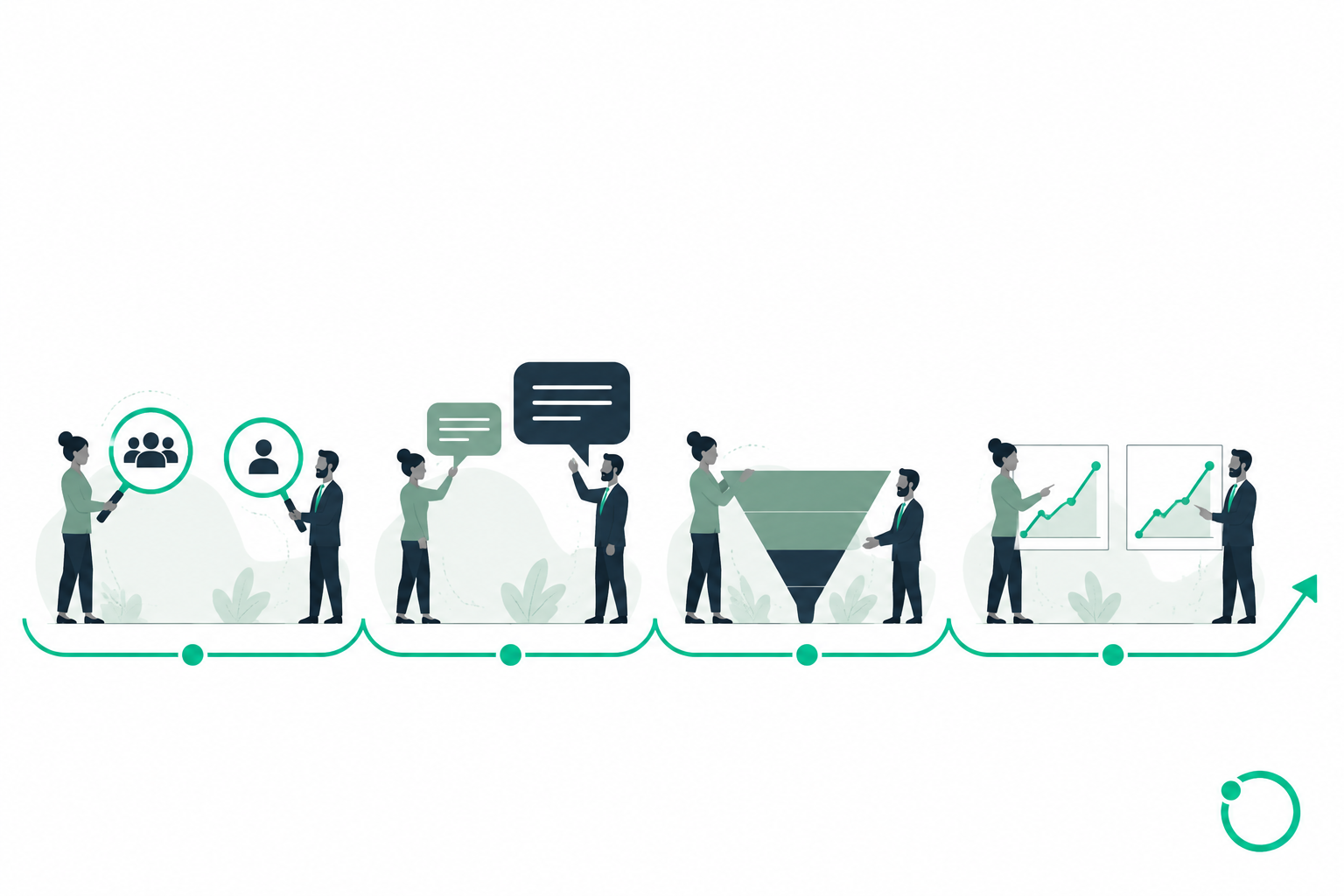
An integrated sales and pre-sales process doesn't mean pre-sales sits in on every call. It means the two functions share visibility into a deal from qualification onward — not from proposal onward.
In practice, that looks like:
The cost of getting it wrong
Deals that stall late don't just delay revenue — they erode trust. A client who's told one thing early and something different later starts to wonder what else might shift. Even when the deal eventually closes, that erosion tends to surface again during delivery, in the form of scope disputes, change requests, or a relationship that starts on the back foot.
And the deals that don't recover represent something worse than a missed number: a signal to the market that the story didn't hold up under scrutiny.
Building it into how we work
At Ouranos Technologies Limited, we don't run sales and pre-sales as sequential stages of a pipeline. We run them as one motion — pre-sales shaping the technical solution while sales shapes the commercial one, in parallel, from the first qualifying conversation. That means fewer surprises late in the cycle, fewer proposals that need to be walked back, and a client experience that feels consistent from the first call to go-live.
It's a simple principle, but one that's easy to lose sight of when sales and technical teams are measured, structured, and incentivized separately: a deal is only as strong as the alignment between the people building the story and the people who have to make it true.