Almost every tech company has run an AI pilot. A working prototype. A promising internal tool. A demo that got people excited. Far fewer have actually gotten that pilot into production — live, monitored, and trusted by the business.
The gap usually isn't the model. It's everything around it.
Why pilots stall
A model that performs well in a sandbox can behave unpredictably once it meets real data, real users, and real scale. Without the right groundwork, teams end up rebuilding integrations after the fact, pausing features because monitoring wasn't scoped upfront, or fielding security questions only after something is already client-facing. The result is a familiar pattern: a genuinely good idea loses momentum, not because it didn't work, but because it wasn't engineered to hold up.
What separates the companies that scale
The tech companies that move from pilot to production treat AI as infrastructure, not a feature bolted onto existing systems. That means:
The takeaway
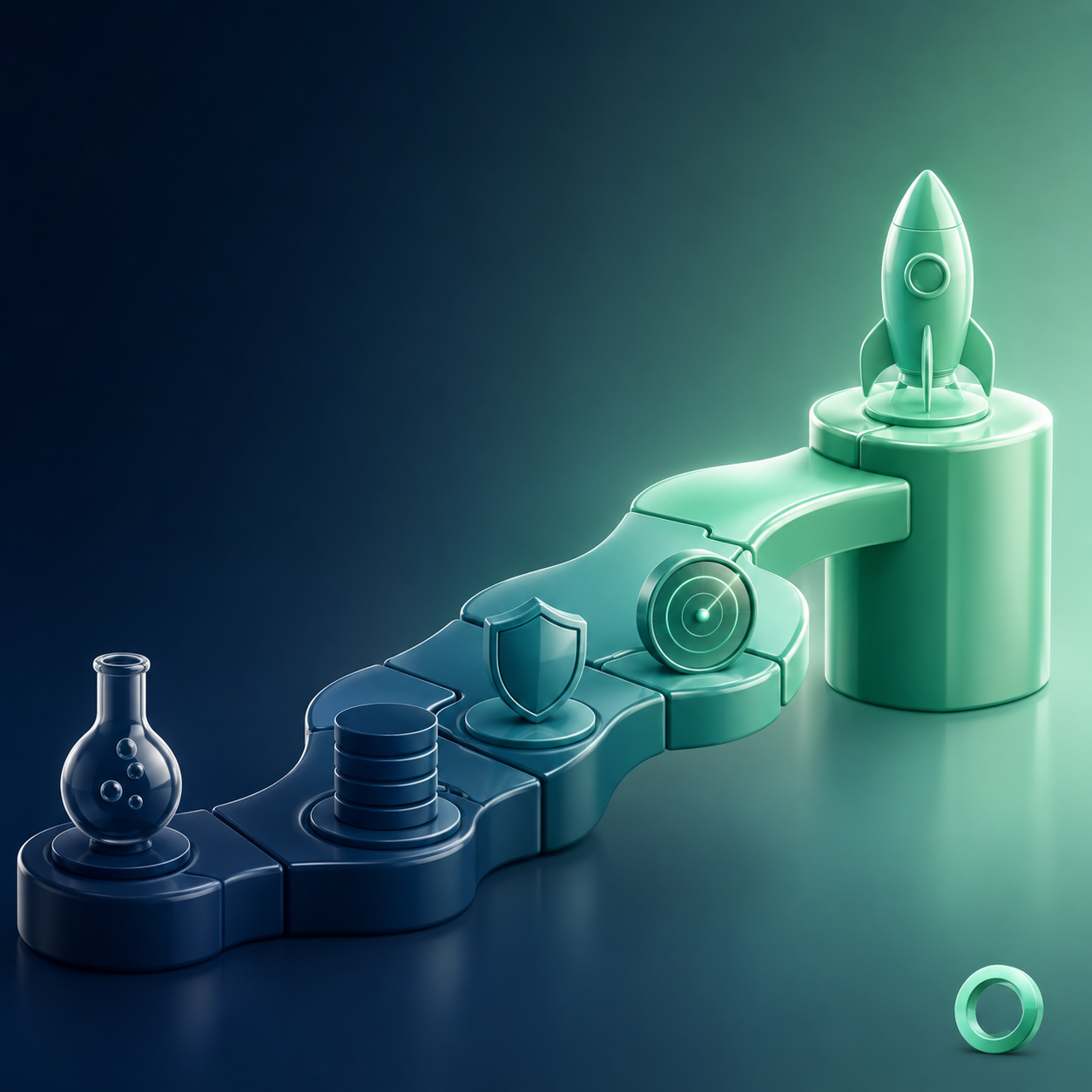
A brilliant model connected to unready infrastructure still produces unreliable results. The companies that successfully scale AI are the ones that treat implementation as seriously as the model itself — assessing the data, securing the system, deploying with monitoring built in, and improving continuously from there.
At Ouranos Technologies Limited, this is exactly how we approach AI implementation for tech companies: engineered to scale from the outset, not patched together after a pilot proves it's worth investing in properly.